en
en  tr
tr ar
arNeurology
Neurology is a medical specialty concerned with the diagnosis, treatment, and management of nervous system disorders. This field covers the brain, spinal cord, and peripheral nerves. Conditions evaluated in neurology include stroke, Parkinson’s disease, Alzheimer’s disease, epilepsy, headaches, and neuropathic pain. A neurologist examines many diseases that affect nervous system functions and applies various treatment methods to improve patients’ quality of life.

The question “What is neurology?” can be answered as follows: it is the branch of medicine that studies nervous system diseases. Neurologists specialized in this field are professionals who evaluate symptoms related to the nervous system, perform tests, and develop appropriate treatment methods. In addition, neurological diseases include Alzheimer’s disease, Parkinson’s disease, epilepsy, stroke, migraine, and MS.
Advanced technologies and diagnostic tests are used in the diagnosis and treatment of diseases in the field of neurology. In this regard, imaging techniques such as MRI (magnetic resonance imaging), EEG (electroencephalography), and CT (computed tomography) play an important role in identifying nervous system disorders. In addition, neurology evaluates not only physical symptoms but also cognitive and psychological signs.
The question “What does neurology treat?” can be answered as follows: this specialty deals with nervous system diseases. In addition, this medical discipline also manages the following disorders:
In addition to the above, the pediatric neurology department identifies neurological disorders seen in children and develops treatment methods.
The first and most important stage of a neurological examination is listening to both the patient’s complaints and medical history. This stage is critically important for understanding when the symptoms began, their severity, course, and past treatment history.
This information also helps determine the possible causes of the disease. In addition, it provides insight into whether the symptoms are due to a neurological disease or another health problem. The examination then continues with the following stages.
Before starting the examination, the patient’s general condition is observed. This stage aims to gather information about the patient’s level of consciousness, mobility, and physical appearance. In addition, the physician evaluates whether the patient has general symptoms such as fatigue, weakness, muscle loss of strength, or motor coordination problems.
Mental status assessment is a critical stage of the neurological examination. This step evaluates the patient’s level of consciousness, orientation, memory, attention, and other cognitive functions. The patient’s orientation to time, place, and person is questioned. In addition, short- and long-term memory tests, attention tasks, and language skills assessment are performed.
Evaluation of the cranial nerves is an important part of the neurological examination. Cranial nerves control the muscles and sensory organs of the head and neck region. Each cranial nerve is assessed separately. For example, the second cranial nerve (optic nerve) is examined through visual field and visual acuity tests.
The third, fourth, and sixth cranial nerves control eye movements, and abnormalities such as asymmetry or drooping are observed at this stage. The seventh cranial nerve controls facial muscle movements.
The motor system is evaluated by observing muscle strength, tone, coordination, and voluntary movements. Muscle strength is graded on a scale from 0 to 5. A score of 5 indicates normal muscle strength, while 0 represents complete lack of muscle power.
Muscle tone reflects the state of muscle tension and relaxation. Tests at this stage assess motor problems such as rigidity, tremor, or spasm. In addition, coordination tests are performed and cerebellar functions are evaluated.
The sensory examination tests the patient’s sensations in different parts of the body. Touch, pain, temperature, and vibration sensation on the skin are evaluated. In addition, proprioception (sense of body position) is also checked.
The sensory test is an important tool that helps detect possible damage by evaluating whether the nerves are functioning properly. For example, diabetic neuropathy is a condition in which peripheral nerves are damaged, and it can be detected through sensory tests at this stage.
A reflex examination is a clinical test performed to evaluate nervous system functions. This test provides information about the status of the central and peripheral nervous systems by examining responses to neural stimuli.
Reflexes are automatic responses that reflect the functioning of nerve pathways in the body and usually occur involuntarily. During the examination, doctors touch various reflex areas or apply gentle taps to specific regions. This method allows physicians to check whether reflexes are present, how strong they are, and whether they deviate from normal. The test is also highly important for detecting possible damage or disorders in the nerve pathways at an early stage.
Areas evaluated during the reflex examination include responses in regions such as the knee, foot, hand, and groin. These tests help assess both voluntary motor functions and involuntary motor responses. In addition, evaluation of tendon reflexes helps in understanding health problems affecting different regions of the nervous system such as the spinal cord and brainstem.
The gait and balance examination is an important clinical test that comprehensively evaluates a patient’s motor coordination, muscle strength, and balance ability. During the examination, the patient is asked to walk normally. Although it may seem simple, this test actually plays a critical role in the early diagnosis of many neurological disorders.
Abnormalities observed during walking may indicate potential problems related to the brain, spinal cord, or nerves. For example, abnormal step length, unsteady walking, or irregular posture may be signs of certain nervous system disorders.
Walking reflects the communication between the brain and spinal cord as well as muscle control processes. Therefore, any disturbance in walking may be a sign of a neurological problem. For example, in motor disorders such as Parkinson’s disease, gait is associated with short, shuffling steps and a fixed posture.
A decrease in the brain’s ability to coordinate movement may also lead to difficulty maintaining body balance. In addition, conditions such as stroke may cause muscle strength and coordination problems due to damage in certain parts of the brain.
A neurological examination is a detailed evaluation process performed to assess a patient’s condition. This process is carried out meticulously by the physician, taking into account the patient’s complaints, medical history, and current neurological status. Findings obtained during the examination play a critical role in determining whether there are deviations from normal in the patient’s nervous system. In addition, the physician carefully evaluates whether each finding may potentially indicate a neurological disease.
The data collected during the examination helps determine whether further tests are needed. For example, if muscle weakness, reflex changes, or sensory loss are observed, these findings may require more detailed testing in those areas. Likewise, complaints such as headache, balance problems, or vision loss may be early signs of various neurological diseases. In such cases, the physician aims to make a clearer diagnosis by evaluating the relevant tests and imaging methods.
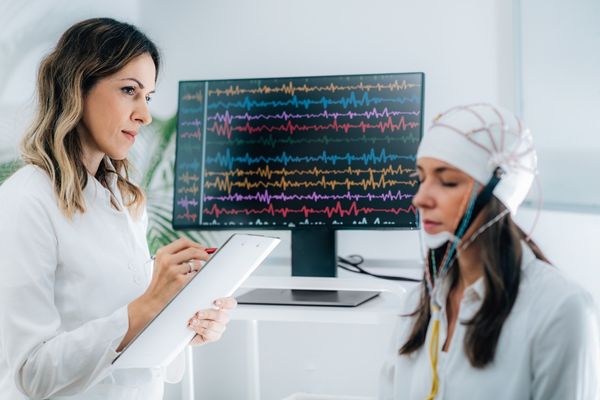
The diagnosis and treatment process of neurological disorders begins with careful evaluation of the patient’s symptoms. In this context, various tools such as clinical examination, medical history, and neurological tests are used during the diagnostic process.
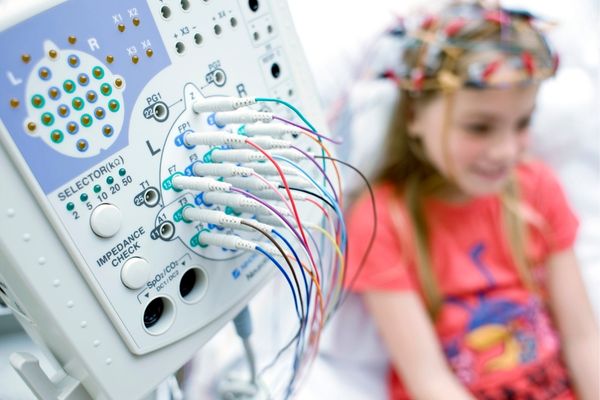
Imaging techniques such as magnetic resonance imaging and computed tomography also play an important role in revealing structural changes in both the brain and spinal cord. In addition, special tests such as electroencephalography and lumbar puncture may be required in the diagnosis of some diseases.
The treatment process varies according to the type and severity of the neurological disorder and the patient’s general health condition. In this framework, some diseases can be managed with medication, while others may require surgical intervention or additional treatment methods such as physiotherapy. For example, drugs such as dopamine agonists and levodopa are preferred for neurodegenerative diseases like Parkinson’s disease.
In patients who have experienced a stroke, there may be tissue damage that needs to be treated rapidly. Surgical treatment may also be necessary to resolve structural problems such as tumors or aneurysms.
At the diagnostic stage, the patient’s complaints, symptoms, and history are first listened to carefully. In this context, the neurological examination assesses the patient’s motor and sensory functions, reflexes, balance, and coordination. In addition, other diagnostic and treatment methods used in the field of neurology include the following:
In addition to the above, neuropsychological tests are also preferred to evaluate cognitive functions such as memory, attention, language, and problem-solving.
Private Aritmi Osmangazi Hospital in Bursa stands out with its comprehensive services in the field of neurology. Specialized in the diagnosis and treatment of nervous system diseases, the hospital applies qualified treatment methods in the management of various neurological disorders such as Parkinson’s disease, Alzheimer’s disease, epilepsy, headaches, balance disorders, and neuropathic pain. In addition, it offers the most appropriate treatment plans for patients through advanced diagnostic methods such as EEG, EMG, and polysomnography.
The hospital’s modern infrastructure plays an important role in the treatment of neurological diseases. In this regard, the hospital is supported by fully equipped laboratories, CT, MR, digital X-rays, and other imaging units, enabling neurological diseases to be diagnosed both accurately and quickly. In addition, with 100 single-patient rooms, 20 adult intensive care beds, and 10 neonatal intensive care beds, patient comfort and safety are prioritized.
Private Aritmi Osmangazi Hospital in Bursa aims to provide high-quality healthcare with its experienced neurology specialists. The expert team evaluates each patient individually, determines the most suitable treatment methods, and keeps satisfaction at the highest level. In addition, the hospital acts with the understanding that “Every Patient Is Special” and produces tailored solutions for each individual’s needs.
Private Aritmi İnegöl Hospital in Bursa attracts attention with the quality services it offers in the field of neurology. In this regard, the hospital has both modern medical equipment and advanced technological infrastructure with its 5,000 m² usage area and 59-bed capacity.
The neurology department consists of experienced physicians specialized in the diagnosis and treatment of nervous system diseases. The expert team aims to provide the most suitable and effective solutions for patients’ health problems.
The hospital’s services include the treatment of facial paralysis, Parkinson’s disease, neuropathic pain, Alzheimer’s disease, headaches, balance disorders, epilepsy, and other neurological syndromes. In addition, patients’ conditions are assessed in detail with advanced diagnostic methods such as EEG, EMG, and polysomnography.
Private Aritmi İnegöl Hospital in Bursa prioritizes patient satisfaction and provides each individual with the care and attention needed throughout the treatment process. It ensures that patients remain in continuous communication with specialist physicians and healthcare personnel during treatment, offering support at every stage.
Neurology is a medical discipline that closely examines nervous system diseases. In this regard, the specialty studies the functions, diseases, and disorders of the brain, spinal cord, and nerves. In addition, it aims to diagnose and treat many neurological conditions such as epilepsy, stroke, headaches, and Parkinson’s disease.
Depression is associated with chemical imbalances and neurological changes in the brain. In this context, specialists evaluate the neurological basis of depression by examining the interaction between brain structures and neurotransmitters.
Neurology doctors perform many tests to evaluate patients’ conditions. These tests include neurological examination, EMG, EEG, MRI, and CT. In addition, neuropsychological and blood tests that evaluate brain functions are also part of the diagnostic process.
Cookies are used on our website to improve user experience. For detailed information, you can review our Cookie Policy.